

NSW Government Resources
Farm Business Resilience Program (FBRP)
The FBRP provides support to farmers to help improve their farm business acumen and achieve their business goals. It offers business coaching, farm tours and workshops, and helps farm businesses develop a drought plan. Designed for all enterprises, large and small, it is ideal for farmers, farm managers, and their employees, who are looking to upskill and learn about risk management, how to adapt to a changing climate, and improve the economic, environmental, and social resilience of their business.
For more information, contact farmbusiness@dpird.nsw.gov.au or visit Farm Business Resilience Program.
The program is jointly funded by the NSW Government and the Australian Government’s Future Drought Fund.
Drought Resilience Adoption and Innovation Hubs
NSW has two hubs that support farmers and communities to get ready for drought. They connect farmers with regional agricultural experts, innovation and new practices, which may also assist in recovery practices.
- Visit the Southern Queensland and Northern NSW hub
- Visit the Southern NSW hub
The program is jointly funded by the NSW Government and the Australian Government’s Future Drought Fund.
Local Land Services (LLS)
Local Land Services works with land managers and the community to improve primary production within healthy landscapes. They provide in the paddock, face-to-face assistance to land managers in a range of areas including agricultural production, animal health, pest and weed management, biosecurity and environmental threats.
For more information, call 1300 795 299 or visit Local Land Services.
Rural Financial Counselling Service (RFCS)
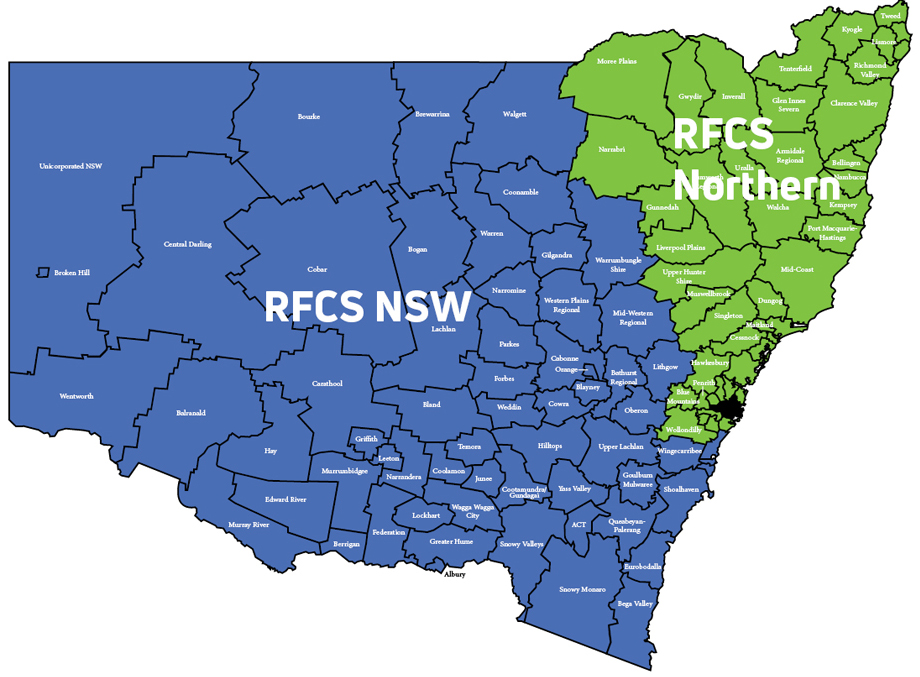
The RFCS provides free and impartial rural financial counselling to eligible primary producers, fishers and small rural businesses who are suffering financial hardship.
A rural financial counsellor can help you:
- understand your financial position
- understand the benefits and drawbacks of different options to manage financial issues
- develop budgets, cash flows and business plans
- create succession planning support
- engage in Farm Debt Mediation
- negotiate with creditors
- access dispute resolution services
- understand your rights and access broader professional advice and support
- understand how to access government and community grants, programs or schemes.
For more information, contact:
- RFCS Northern Region or call 1800 344 090
- RFCS NSW – Central & Southern Regions or call 1800 319 458.
The Rural Assistance Authority (RAA)
The RAA administers a range of assistance, including:
- low interest loans – funding by a loan to meet the costs of carrying out permanent capital works that will have a significant beneficial impact on the land, long-term profitability of the business and address adverse seasonal conditions.
- natural disaster assistance programs for primary producers
- farm debt mediation.
For more information, call 1800 678 593 or visit Rural Assistance Authority.
Service NSW Business Connect
Business Connect is an advisory program for businesses in NSW, including agribusinesses.
For more information, call 1300 134 359 or visit Service NSW Business Connect to find an advisor.
Office of the NSW Small Business Commissioner
An advisory program for small businesses in NSW providing information, guides & support.
For more information, visit NSW Small Business Commissioner.
Australian Government Resources
Recovery does not happen immediately, and farm businesses and communities will start their recovery at various times based on local conditions and their unique business or community characteristics. There are ongoing and accessible programs available to support recovery. Farming businesses and individuals can choose how and when to use that support to best meet their needs.
RIC (Regional Investment Corporation)
The Australian Government offers a number of concessional loan products to eligible farm and farm-related businesses.
For information about the loans and eligibility requirements call the RIC on 1800 875 675 or visit Regional Investment Corporation.
If you have an existing Commonwealth concessional loan, the Rural Assistance Authority (RAA) will continue to administer this loan. Phone 1800 678 593 if you have any questions about your existing loan.
Farm Household Allowance
The Farm Household Allowance is a program of support for farmers and their partners who are experiencing low cash flow. There are four financial components, underpinned by practical support to help people examine their business and make sustainable changes. The $10,000 Activity Supplement plays a large part in the change process because people can pay for professional advice and/or training to achieve their goals. Around 18,500 people have accessed the program in its first 10 years of operation, and most of the feedback is that it makes a significant difference in the short to medium term.
For more information, contact the Farmer assistance line on 132 316 or visit Farm Household Allowance.
Farm Management Deposit Scheme
Farm Management Deposits (FMD) can help eligible primary producers set aside income in good years that they can draw on when they need it. Income deposited into an FMD account is tax-deductible in the financial year the deposit is made. It becomes taxable income in the financial year in which it is withdrawn.
FMD is useful for:
- smoothing fluctuating income
- offering possible tax benefits
- maximising profits
- strengthening financial sustainability
- restocking or replanting when conditions improve
- building up cash reserves.
For more information, contact the ATO on 13 28 66 or visit Farm management deposits scheme.
Australian Government Disaster Support
Help is available for people directly affected by a natural disaster in NSW, such as fires, storms or floods. You may be eligible for Australian Government disaster support.
Australian Taxation Office (ATO)
Primary producer concessions
Primary producers generally run a business of plant or animal cultivation, fishing or pearling, or tree farming or felling. Primary producers are provided with special tax concessions, including:
- tax averaging to even out income and tax payable over a maximum of five years to allow for fluctuations in prices and production
- spreading or deferring profits from the forced disposal or death of livestock
- accelerated depreciation for fencing, dams, pumps, silos, bins, landcare operations and carbon sink forests.
For more information, talk to your accountant or visit the ATO at Primary Producers.
The ATO also has a range of options for farm businesses affected by drought and other adverse events, and can help with:
- more time to pay
- waiving penalties or interest charged at a time you were affected by drought
- payment plans with interest-free periods
- adjusting pay as you go (PAYG) instalments to better suit your circumstances
- tax incentives for primary producers.
For more information, call 1800 806 218 or visit Support in difficult times.
Tax treatment of forced livestock sales due to pasture and fodder loss
The five years following a forced livestock sale
If you are obliged to sell livestock because of the destruction of pastures or fodder through drought, flood or fire, you can elect to spread over five years the profit on the livestock sale. This means that one-fifth of the profit would be included in your gross income for the year of the sale of the livestock, and one-fifth would be included in the gross income for each of the following four years. To take advantage of this concession, you are required to declare that the sale was genuinely occasioned by the loss or destruction of pastures or fodder because of drought, flood or fire. You must also demonstrate that the main part of the proceeds of the sale will be used to purchase replacement livestock or will be used in the maintenance of breeding stock for the purpose of restocking.
You may elect to have the profit on a forced livestock sale excluded from your assessable income for the year in which it was derived and applied to reduce the cost of stock acquired during that year (or any of the five years after the sale) to replace the stock disposed of. Where replacement stock is bred instead of purchased, you may elect to include in your assessable income, over the same period, appropriate instalments of the profit on the forced sale (as described above).
If at the end of the fifth year from the year in which the forced sale occurred, any part of the profit on the disposal has not been applied in reducing the cost of new stock purchased, or has not otherwise been included in assessable income, the amount that has not been applied will be included in your assessable income for that fifth year.
Where you are eligible to elect to spread your income, you may become ineligible if you:
- become bankrupt, insolvent or die
- permanently depart Australia
- cease to carry on the primary production business to which the election relates.
Industry
Dairy Australia
Dairy Australia has resources, tools and activities to help dairy farmers during adverse events.
For more information, call Dairy Australia on 1800 270 778 or visit:
Australian Pork Limited (APL)
APL is a producer-owned organisation supporting the Australian pork industry.
For more information, call APL on 1800 789 099 or visit Australian Pork.
Meat and Livestock Australia (MLA)
MLA fosters the long-term prosperity of the Australian red meat and livestock industry. MLA is a service provider to the red meat industry, not an industry representative body or lobby group.
Support information is available from MLA’s Dealing with natural disasters.
NSW Farmers
NSW Farmers is a membership organisation representing farmers across NSW. As well as advocating for farmers on issues that shape agriculture and regional areas, they provide direct business support and advice to their members.
For more information, call 02 9478 1000 or visit NSW Farmers.